By Diaspora Insurance News
“Put a full cooked cow there with corn meal porridge and we will eat it up in minutes,” quipped one woman with a grin during a memorial and fundraising service for a young Namibian woman who recently died in the United Kingdom.
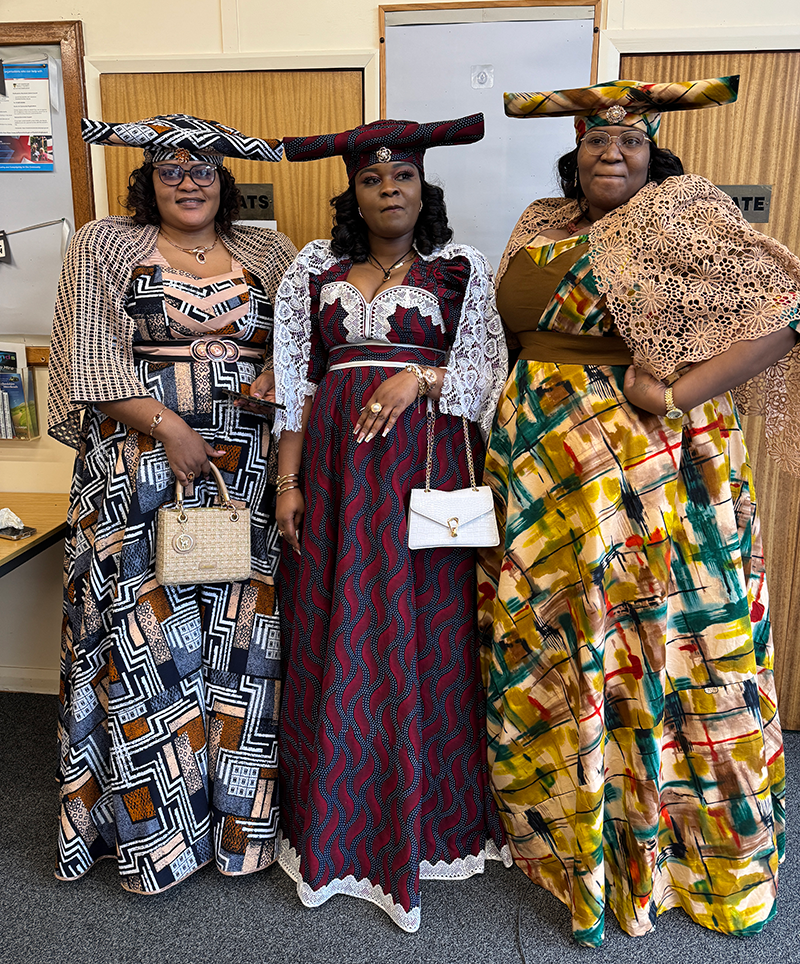
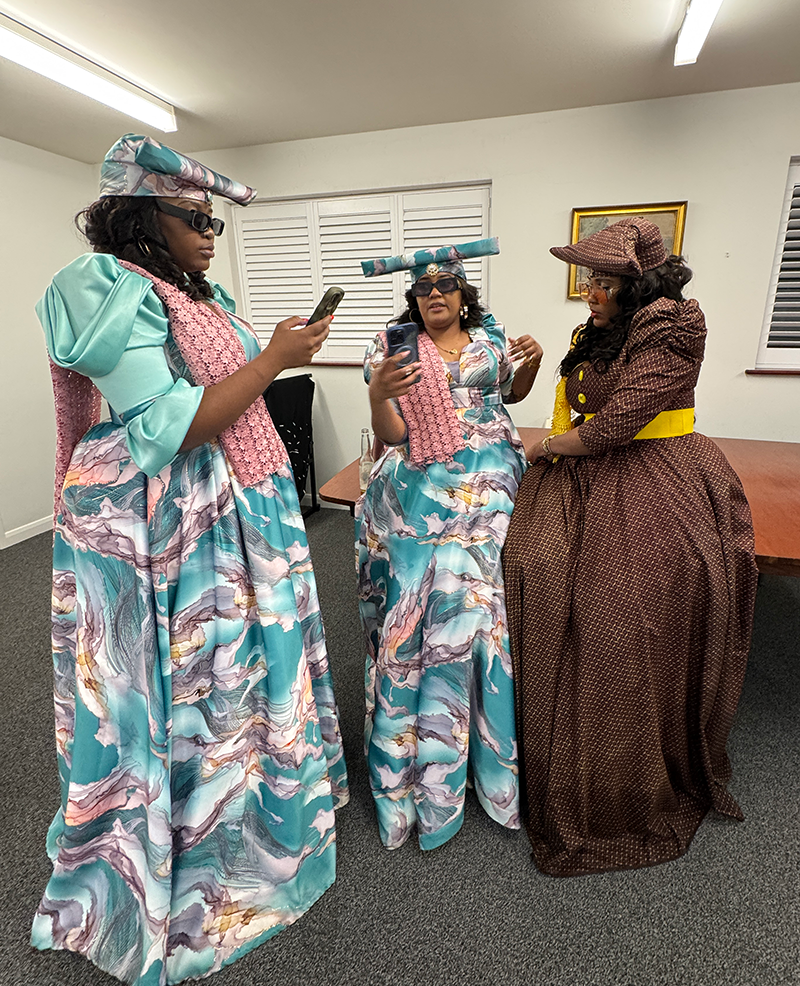
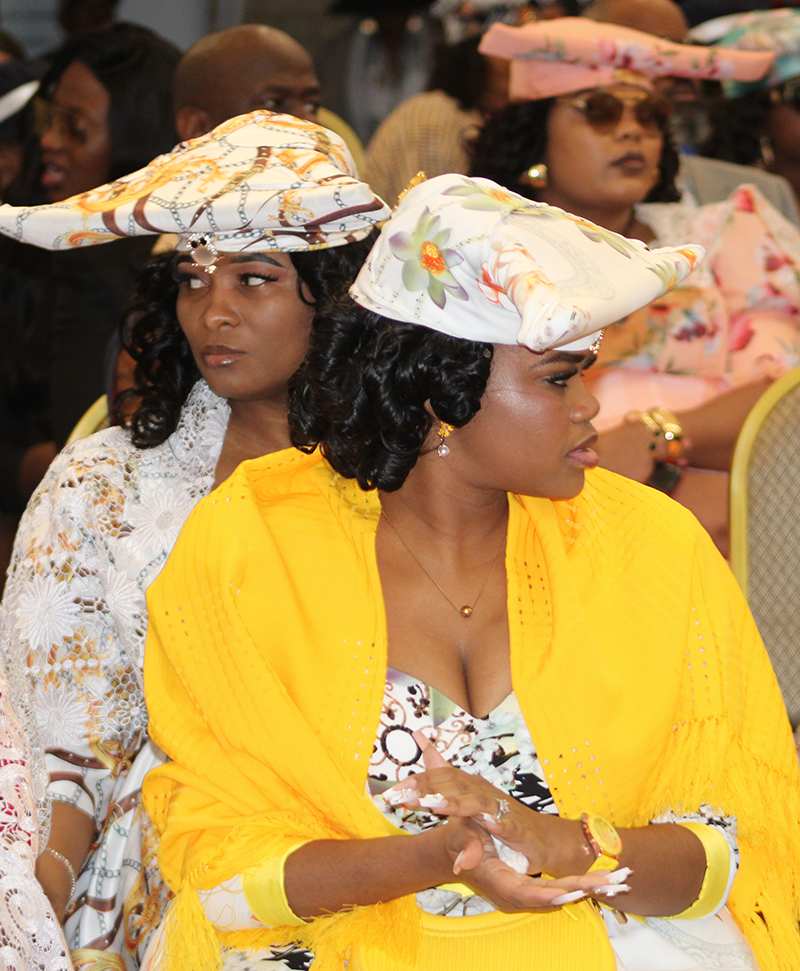
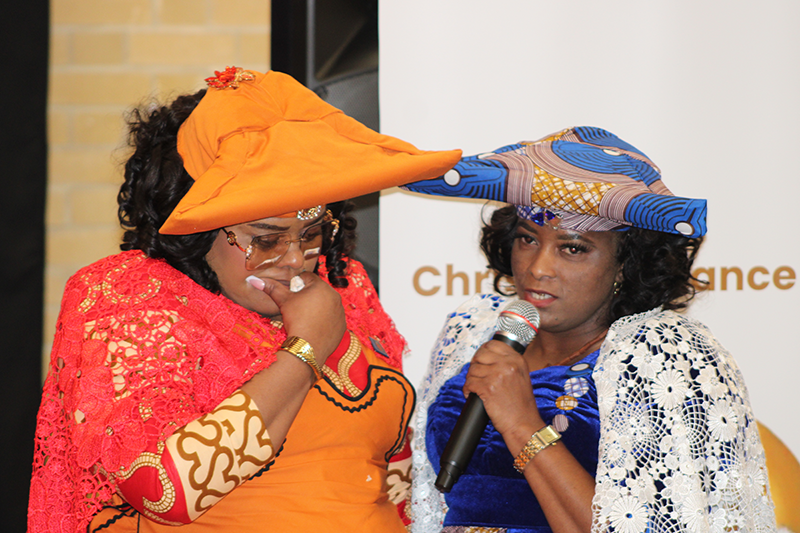
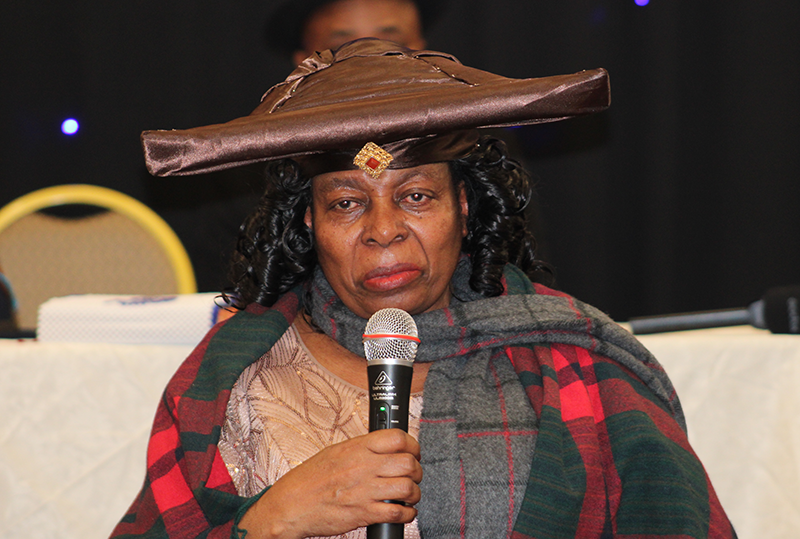
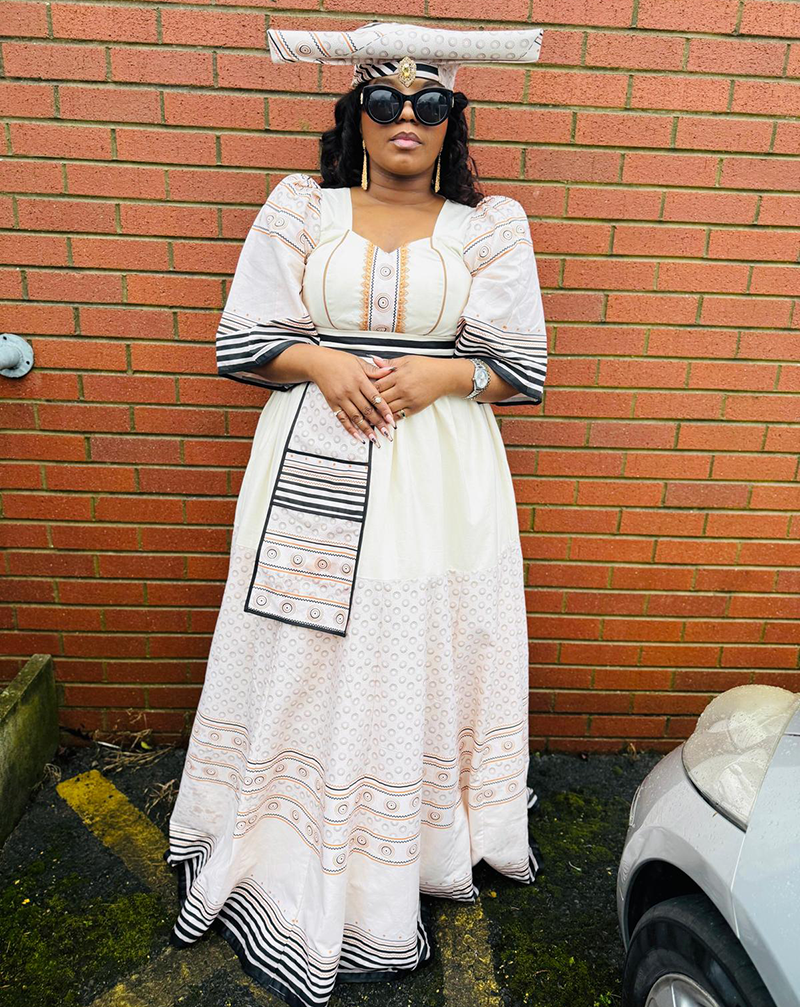
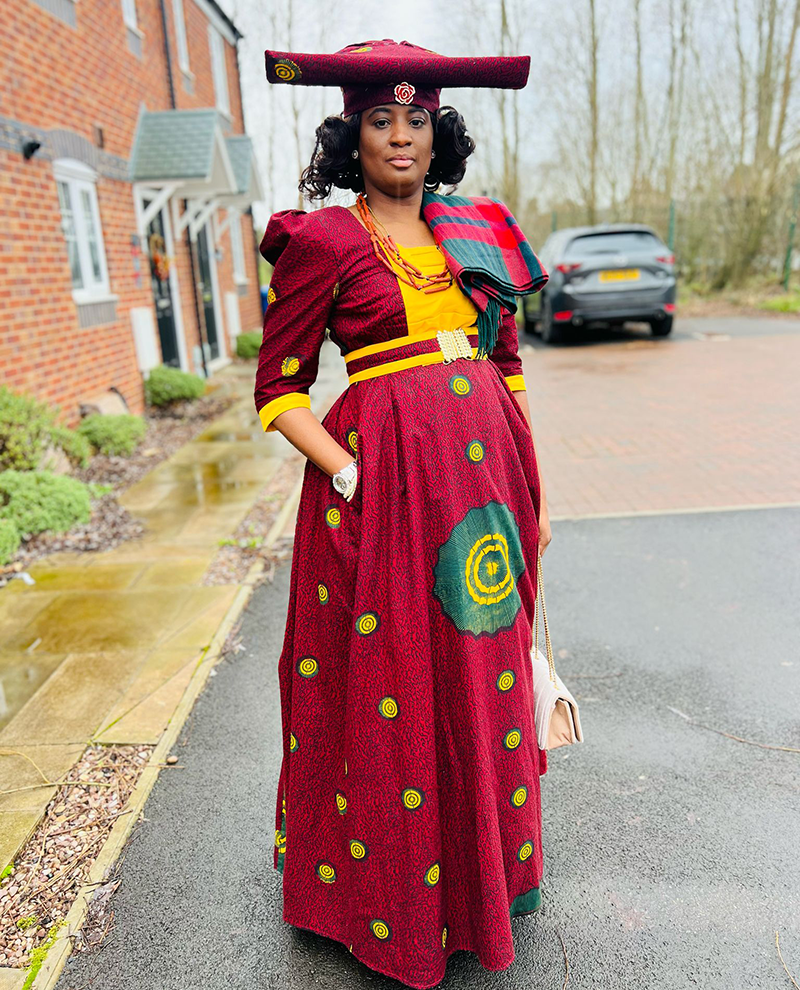
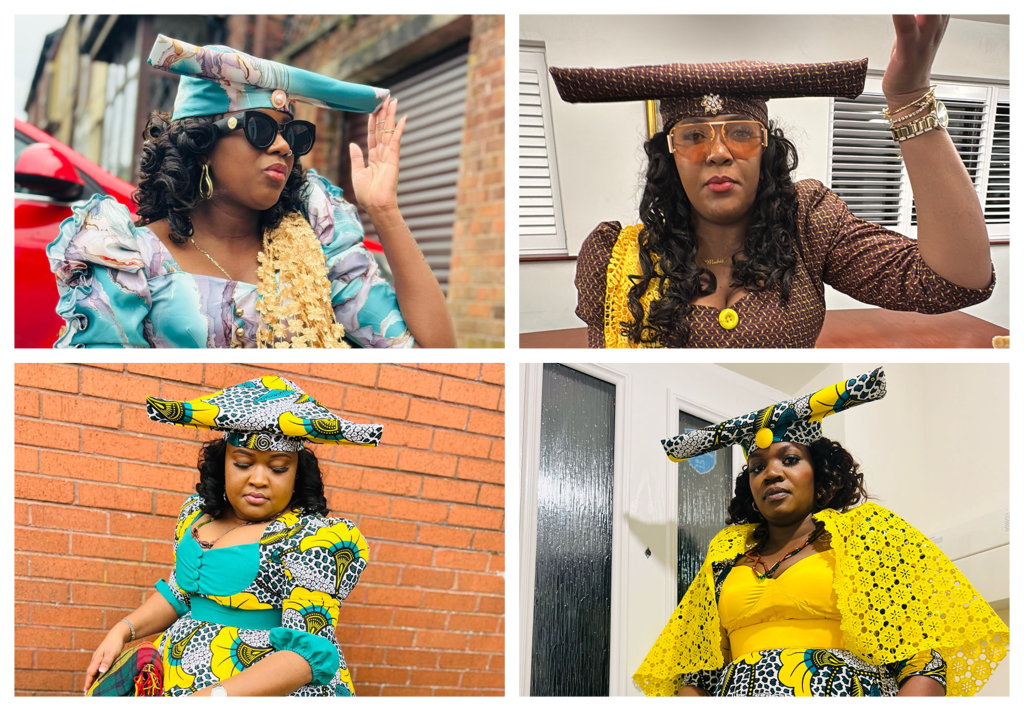
She was decked out in a colourful ankle-length and voluminous costume, while her head featured an equally colourful doek hat shaped like the horns of a cow.
She was among the hundreds of people who attended a memorial and fundraising service for the late Metarere Uendjii Kaura who tragically died after on the 25th January 2025 after being admitted to a London hospital.
Supported by Diaspora Insurance, the event was held on the 23rd of February at the Village Hall in Whiston, Stoke-on-Trent and most of the female attendees wore the traditional dress.
The outfit captures and represents the history and culture of the Herero people of Namibia, and represents a socio-cultural background to which they are unshakeably loyal.
 The Herero are based in central Namibia and remain a very distinct ethnic group, proud of their heritage and determined to preserve their way of life against the onslaught of modernisation.
Some 179,000 of them remain, less than six percent of Namibia’s population, according to the country’s 2023 census.
But what is the meaning of this sartorial tradition and what are its origins? Significantly too, how has it managed to defy and survive submersion by global cultural influences?
Beginning with the cow-horn headdress, or otjikaiva as they call it, the Herero wear it as a representation of their pastoral origins and as a symbol of the continuing significance of cattle in their lives today.
Having migrated to present-day Namibia from East Africa around the 16th century, the Herero established themselves as successful cattle farmers and developed a sophisticated social structure based on their livestock.
“To this day, the wealth of a Herero, or poverty, of a Herero is measured by the number of cattle they have,” one woman explained.
Similarly, the elegant and voluminous dresses called ohorokova are symbolic of Herero defiance and a constant reminder of their tragic interaction with colonialism.
Prior to colonisation by Germany in the 19th century, Herero women wore long, hide aprons which was then replaced by the long Victorian Style dresses introduced by the Europeans as they enforced their customs and sense of modesty.
The Herero launched a revolt against the colonial occupiers around 1904 and the Germans responded with a brutal campaign to put the rebellion down.
Between 50,000 and 60,000 Herero were shot, poisoned or driven into the desert to die in what is now widely recognised as the first genocide of the 20th century.
It is believed that the genocide wiped out 85 percent of the Herero during this period and this tragic legacy of colonial violence and genocide continues to shape the experiences of the tribe.
That the Herero adopted the Victorian dress style of the Germans was not about embracing of colonial occupation and Western culture. Rather, adoption of the style and culture of the oppressor was, and still is, seen as act of defiance and subversion; it’s a way of diminishing the power of the occupier.
By embracing the coloniser’s ways, the Herero chose to take the symbol of oppression and transformed it into a celebration of their culture and heritage.
Interesting Facts about the Herero
- The Herero language is a Bantu language and is spoken by over 200,000 people in Namibiaand Botswana.
- During the popular outjina dance, the ‘dance of the cow head’, Herero women stamp their feet and kick up dust and imitate the upraised horns and swaying movements of cattle.
- Ohorokova is handmade and seen as a rite of passage into womanhood for Herero women.
- The modern practice of donning military uniforms stems from the 1908 uprising when Herero men would wear the uniforms of German soldiers they had killed in battle. Today it is a way of honouring their warrior ancestors.
- The wealth of the Herero is measured by the number of cows they have. Their pride in being cattle rearers is reflected in the women’s fashion – the Herero hat or headdress uniquely shaped like the horns of a cow.
- The Herero inherit their place of residence, religion, and authority from the father’s line, while wealth is transferred (inherited) through the mother’s line.
MORE IMAGES: